Referencias
Parker:DSH101CR
Rubix:799325021000
fabricante:DSH101CR
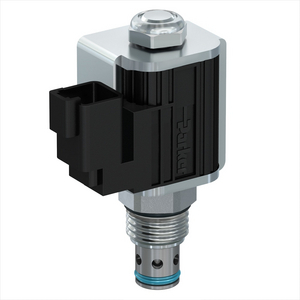

Detalles de producto : DSH101CR
Parker’s 2-way poppet style solenoid valves feature a proven design that ensures very low leakage when flow is blocked in one direction and minimized pressure drop in the free flow position. These valves can operate with hydraulic system flows as high as 260 lpm and pressures up to 350 bar with normally-open or normally closed configurations available. Parker’s 2-way poppet solenoid valves are ideal for unloading and load holding applications that require low poppet style leakage within mobile, industrial, or manufacturing markets.
Markets:
• Aerial
• Construction
• Material Handling
• Miscellaneous Industrial
• Miscellaneous Manufacturing
• Miscellaneous Mobile
Features & Benefits:
• Replaceable one-piece coils with low amp draw
• Fast response available
• Manual override options
• Low leakage spherical poppet
• All external parts zinc plated
Applications:
• Unloading circuits
• Load holding applications
• Lift circuits
Additional Technical Insight:
Parker’s 2 way poppet valves are pilot operated, low leakage solenoid actuated valves. Similar to a check valve, these valves will block flow in one direction will very low leakage (5 drops per minute, or less). When actuated, these valves allow flow to pass through the valve. These valves are typically selected due to their low leakage characteristics and their ability to meet higher flow requirements. Poppet valves are often used on single operation actuators or in unloading functions. They are available in normally closed and normally open types with fast response versions available.
Parker’s two way, two position poppet valves consist of a main poppet, a pilot piston, a spring, and a solenoid coil.
The normally closed poppet version of these valves will act as a check valve when the valve is de-energized. This blocks flow in both directions while allowing free flow in the reverse direction. When the coil is energized, the poppet is piloted open (lifts) and allows free flow in the previously checked direction, typically from the side of the cartridge out the nose.
The normally open poppet version of these valves, when the coil is de-energized, will allow free flow from the side port of the valve (port 2) out the nose of the valve (port 1). Energizing the coil shifts the poppet to block flow in both directions.
Operation: The normally closed poppet valve is held on its seat by a spring, blocking the pilot flow. This will allow pressure at the inlet port (port 2) to hold the poppet on its seat preventing flow through the valve (port 2 to port 1).
If the nose of the cartridge (port 1) is pressurized enough to overcome the spring force, and pushing the poppet off of its seat, flow will be allowed through port 1 to port 2. When the coil is energized, the pilot poppet is lifted off of its seat, venting the pressure inside the poppet to port 1. This creates a pressure imbalance across the main poppet, therefore lifting the poppet and allowing flow from the side to the nose (2 to 1). Because these valves are pilot operated, a minimal amount of pressure differential is necessary (25-50 psi), along with flow between ports 2 and 1 must be present to overcome the spring and lift the poppet.
The normally open valve pilot is held off its seat by spring force. Pilot flow is vented to port 1, creating a pressure imbalance that moves the main poppet. This differential lifts the poppet allowing flow from the side to nose (2 to 1). Since poppet valves are pilot operated, a minimum amount of pressure differential (25-50 psi) between ports 2 overcomes the spring force to drive the valve pilot and main poppet into their seats, thus blocking flow from port 2 to 1. If the nose of the cartridge (port 1) is pressurized, the pressure will overcome the spring force and solenoid force, pushing the poppet off of its seat, allowing restricted flow through the cartridge (1 to 2).
Markets:
• Aerial
• Construction
• Material Handling
• Miscellaneous Industrial
• Miscellaneous Manufacturing
• Miscellaneous Mobile
Features & Benefits:
• Replaceable one-piece coils with low amp draw
• Fast response available
• Manual override options
• Low leakage spherical poppet
• All external parts zinc plated
Applications:
• Unloading circuits
• Load holding applications
• Lift circuits
Additional Technical Insight:
Parker’s 2 way poppet valves are pilot operated, low leakage solenoid actuated valves. Similar to a check valve, these valves will block flow in one direction will very low leakage (5 drops per minute, or less). When actuated, these valves allow flow to pass through the valve. These valves are typically selected due to their low leakage characteristics and their ability to meet higher flow requirements. Poppet valves are often used on single operation actuators or in unloading functions. They are available in normally closed and normally open types with fast response versions available.
Parker’s two way, two position poppet valves consist of a main poppet, a pilot piston, a spring, and a solenoid coil.
The normally closed poppet version of these valves will act as a check valve when the valve is de-energized. This blocks flow in both directions while allowing free flow in the reverse direction. When the coil is energized, the poppet is piloted open (lifts) and allows free flow in the previously checked direction, typically from the side of the cartridge out the nose.
The normally open poppet version of these valves, when the coil is de-energized, will allow free flow from the side port of the valve (port 2) out the nose of the valve (port 1). Energizing the coil shifts the poppet to block flow in both directions.
Operation: The normally closed poppet valve is held on its seat by a spring, blocking the pilot flow. This will allow pressure at the inlet port (port 2) to hold the poppet on its seat preventing flow through the valve (port 2 to port 1).
If the nose of the cartridge (port 1) is pressurized enough to overcome the spring force, and pushing the poppet off of its seat, flow will be allowed through port 1 to port 2. When the coil is energized, the pilot poppet is lifted off of its seat, venting the pressure inside the poppet to port 1. This creates a pressure imbalance across the main poppet, therefore lifting the poppet and allowing flow from the side to the nose (2 to 1). Because these valves are pilot operated, a minimal amount of pressure differential is necessary (25-50 psi), along with flow between ports 2 and 1 must be present to overcome the spring and lift the poppet.
The normally open valve pilot is held off its seat by spring force. Pilot flow is vented to port 1, creating a pressure imbalance that moves the main poppet. This differential lifts the poppet allowing flow from the side to nose (2 to 1). Since poppet valves are pilot operated, a minimum amount of pressure differential (25-50 psi) between ports 2 overcomes the spring force to drive the valve pilot and main poppet into their seats, thus blocking flow from port 2 to 1. If the nose of the cartridge (port 1) is pressurized, the pressure will overcome the spring force and solenoid force, pushing the poppet off of its seat, allowing restricted flow through the cartridge (1 to 2).
Tipo de accionamiento: Eléctrico
Mecanismo de ajuste: N/A
Material del cuerpo: N/A
Tamaño de la cavidad: C10-2
Par de apriete de la tuerca de la bobina: 5-7, 7-10
Tipo de bobina: Superbobina de 5/8"
Configuración: Normalmente cerrado
División: División de sistemas hidráulicos
Índice de eficiencia del filtro: ISO 4406 18/16/13, SAE Clase 4
Dirección del flujo: De lado a punta (2-1)
Caudal: 15, 60
Caudal: 15 GAL/MIN, 60 L/MIN
Para tipo de fluido: Fluidos hidráulicos minerales o sintéticos
Flujo inverso libre: Sí
Función: 2 vías
Tensión de entrada: 85 % de la tensión nominal a 72 °F (20 °C)
Par de instalación: 51-55, 69-75
Tasa de fuga: 5
Caudal máximo: 15, 60
Presión nominal máxima de entrada: 5000, 350
Presión nominal máxima de entrada: 5000 PSI, 350 BAR
Viscosidad cinemática máxima: 45-2000 SSU (6 a 420 cSt)
Presión máxima de funcionamiento: 5000, 350
Temperatura máxima de funcionamiento: +200, +93
Temperatura mínima de funcionamiento: -35, -37
Tipo de montaje: Válvula de cartucho atornillable
Temperatura de funcionamiento: -35 a +200, -37 a +93
Tipo de funcionamiento: Accionado por solenoide
Función de anulación: N/A
Tiempo de respuesta: 80
Material del sello: Anillo en D (estándar)
Material de la válvula: Todas las piezas son de acero. Todas las piezas operativas son de acero endurecido
Peso: 0,41, 0,2
Pantalla de malla metálica incluida: No
Mecanismo de ajuste: N/A
Material del cuerpo: N/A
Tamaño de la cavidad: C10-2
Par de apriete de la tuerca de la bobina: 5-7, 7-10
Tipo de bobina: Superbobina de 5/8"
Configuración: Normalmente cerrado
División: División de sistemas hidráulicos
Índice de eficiencia del filtro: ISO 4406 18/16/13, SAE Clase 4
Dirección del flujo: De lado a punta (2-1)
Caudal: 15, 60
Caudal: 15 GAL/MIN, 60 L/MIN
Para tipo de fluido: Fluidos hidráulicos minerales o sintéticos
Flujo inverso libre: Sí
Función: 2 vías
Tensión de entrada: 85 % de la tensión nominal a 72 °F (20 °C)
Par de instalación: 51-55, 69-75
Tasa de fuga: 5
Caudal máximo: 15, 60
Presión nominal máxima de entrada: 5000, 350
Presión nominal máxima de entrada: 5000 PSI, 350 BAR
Viscosidad cinemática máxima: 45-2000 SSU (6 a 420 cSt)
Presión máxima de funcionamiento: 5000, 350
Temperatura máxima de funcionamiento: +200, +93
Temperatura mínima de funcionamiento: -35, -37
Tipo de montaje: Válvula de cartucho atornillable
Temperatura de funcionamiento: -35 a +200, -37 a +93
Tipo de funcionamiento: Accionado por solenoide
Función de anulación: N/A
Tiempo de respuesta: 80
Material del sello: Anillo en D (estándar)
Material de la válvula: Todas las piezas son de acero. Todas las piezas operativas son de acero endurecido
Peso: 0,41, 0,2
Pantalla de malla metálica incluida: No
Información técnica
Atributos
| Tipo | válvula hidráulica dsh101cr |
|---|---|
| Número de puertos | 2 |
| Presión de servicio máx. | 350 bar |
| Tasa de flujo volumétrico | 60 l/min |
| Rango de presión | maks. 350 bar (5000 psi) |
| Tamaño del puerto | 1/2 |
Mostrar UNSPSC/ECL@SS/Customs
325,00 € Sin IVA
/ unidad
393,25 € IVA incluido
- Entrega estimada (15) días